About Yakuza Honor Demo: Character and Multiplier
This is a third-party free-play demo, not real-money play on Demo slot pg. Availability and access checks are controlled by the provider. Demo results do not predict future outcomes.
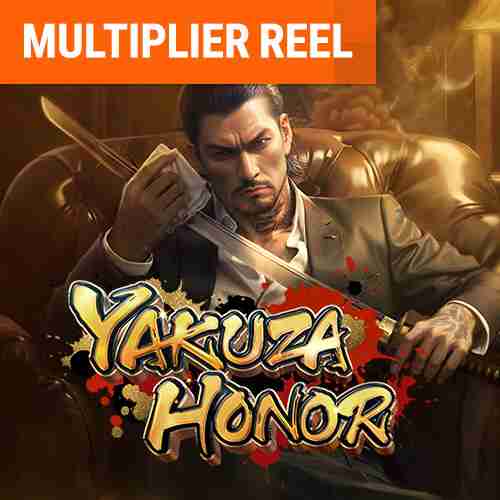
Yakuza Honor borrows its style from crime drama, with shadowed interiors and a sharply dressed central figure. In the playable game that character is more than the subject of the cover: the provider gives the Yakuza symbol a specific role in changing the multiplier when it is part of a qualifying result.
What to find before you start
The player above opens the free-play version of Yakuza Honor. Give the title screen time to finish, then look for the five-by-five grid, the Yakuza portrait in the symbol key and the multiplier readout without starting another round. Open the game’s own information screen for its symbol key. The crime-drama artwork identifies the title, but a portrait inside the marked combination is the specific observation that makes the rule understandable. A similar portrait outside that combination can help serve as the contrast when comparing the provider’s images. Note where the key or rule illustration sits so you can bring it back after an unfamiliar result.
Yakuza Honor uses a fictional Tokyo crime-drama setting, but the central portrait is also important as a game symbol. Find the specific Yakuza symbol in the provider’s guide rather than assuming every portrait belongs to the same rule. A photo-like image in the introduction may be storytelling art rather than a playable position.
Identify the character symbol
The multiplier can activate or increase when the game records a qualifying result. PG SOFT describes a different increment when that result involves the Yakuza symbol. The useful cue is the icon’s participation in the combination, not the mere visibility of the character somewhere on the board. Read the highlight before reading the number.
The official introduction describes an increase of five in the multiplier when the Yakuza symbol participates. That is a change to a displayed value, not five cash units or a separate prize. Trace the positions the game highlights, confirm that the relevant portrait is among them, and then compare the numerical display in the provider’s example.
Keep these two parts of the interface separate
The Scatter has a separate role. The provider describes three Scatters as the condition for twelve free spins. The Scatter count is about how a different stage opens. The Yakuza symbol rule concerns a value associated with a qualifying outcome. Learn the icons separately so a prominent image does not lead you to the wrong rule.
The numbered part of the interface also needs context. A prominently displayed score or an overlay reported at the end of a sequence is not evidence about a previous frame on its own. Check the label, whether the mode has changed, and whether the board actually shows the portrait participating before you interpret the value.
Read two different situations side by side
Suppose a scene highlights a cluster of matching symbols and a Yakuza portrait is one of the highlighted positions. This is a situation to compare with the illustration of that rule. Start with the original combination, then read the change in the multiplier. Imagining it is a reading exercise, not a reason to wait for it.
Now picture a portrait visible in a corner but not included in the highlighted combination. The mere presence of the image does not establish the special increment described in the rule. Look at the cells the provider marks and then read the result label. The story artwork may be recognizable even when it is not part of that event.
Both situations are hypothetical examples of how to read the screen in Yakuza Honor. Their value is in distinguishing a starting cue from a visual consequence. The provider’s rules are the reference for that distinction. If you only see the ordinary game, you can still check each example in the help panel and observe where its graphics and numbers would be reported. There is no need to keep trying to make either scene appear.
What to check in the provider’s information panel
First check the symbol key for the Yakuza portrait and the Scatter. Then locate the corners of the five-by-five grid and note where the multiplier is displayed. This is a useful way to translate the help pictures onto the full screen, especially when the interface shows portraits in both the background and the board.
Next read the ordinary multiplier rule and the distinct Yakuza participation rule in the order they appear in the information panel. Work through a single example at a time. After that, find the free-spin trigger and look for the separate indicator of where the game has entered that mode.
How do I tell the two apart? The first question is whether the icon participates in the highlighted combination. If it does, the special multiplier entry is useful. If you are counting Scatters instead, read the condition for the change in game mode. These are two different questions and neither can be answered by looking at the virtual balance alone.
Do I need to see the feature in free play? No. The provider illustrates which symbol matters and where its value changes. A short free-play visit can also help you recognize the portrait and the surrounding board. You need not see the special increment or the free-spin screen to finish locating both rules and seeing how the display labels them.
Use the free-play screen as a reference
The fictional story is not a guide to real organizations or conduct. The demo number is also not a cash result: it reports one event in a provider-controlled simulation. Learning to distinguish a highlighted symbol, a numeric change and a mode transition is useful; a sequence of past results does not forecast another.
Results in Yakuza Honor describe what happened on this simulated board. They do not establish a future sequence, the value of a prize, or the terms of another version of the game. In particular, each simulated feature can be understood from the corresponding rule example without waiting for a round to match it exactly. You can leave the player after checking the part of the interface you came to understand.
Source notes and availability
This guide uses PG SOFT’s official Yakuza Honor information for the game rules. The official game catalog page identifies the title. The existing demo listing is credited for discovery, not for this text. The free-play frame is hosted by the provider and may have its own availability or language options. See the website policies for more about the service.