About Diner Delights Demo: Food and Card Icons
This is a third-party free-play demo, not real-money play on Demo slot pg. Availability and access checks are controlled by the provider. Demo results do not predict future outcomes.
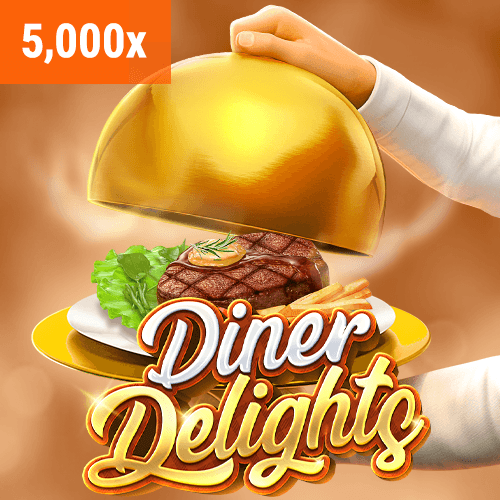
Diner Delights brings a restaurant theme to a board that mixes food illustrations with familiar card-style icons. The food makes the setting recognizable; the information screen tells you which images count as game symbols. Compare those two sets before the animation starts, and look up the Scatter icon while the board is still.
Get your bearings in the demo
Before trying a round of Diner Delights, check that the free-play screen shows the exact title and then look for the full six-by-six board, the food and card symbols, and the separate multiplier examples. The symbols on its opening screen can help you recognize the title, but they are not a substitute for the rules in the provider’s information menu. The restaurant story gives the board its appearance; the symbol labels and the three distinct number displays give you the means to read it. If you are reading on a phone, return from the information panel before comparing the board with the result display.
Diner Delights makes its theme clear through the serving dishes and restaurant scene. The provider’s manual also shows several card-style symbols, so do not assume that every ordinary icon should look like food. Use the symbol key to separate ordinary images from a Scatter or a number-bearing Multiplier symbol before you compare a result.
Read two kinds of menu
The English rules identify a square six-by-six board and allow Multiplier symbols to appear with values from two to five. The number on one symbol is a component of the result calculation, not an amount in the session balance. Locate the symbol on the board before looking for the total reported later in the sequence.
At the end of a qualifying spin, the provider describes the symbol multipliers adding together and that total acting on the result. Adding the labels isn't the same as multiplying them by one another. If you are reading a rule example, first group the values visible on the board, then use the outcome display to follow the separate calculation.
A different cue changes what to look for
The restaurant pictures and card ranks belong to the same board, but being part of the same visual theme is not a rule. Compare the key and the highlighted positions when you see the main game. The provider shows the rules for symbols in the game help; the name of a dish does not tell you how its icon is evaluated.
Three Scatters are the opening condition for the free-spin feature described by the developer. Another rule in that mode concerns a total multiplier remaining after one virtual result and being combined with the next qualifying amount. Read the carrying-over rule under the special mode description, not as a default property of every main-game result.
A worked example, and a contrasting case
Imagine an illustrated board with one symbol marked two and another marked three. The example is useful because the two values add to five before that total is applied to the result. It does not mean the screen is showing two separate prizes or that matching amounts will appear together when you open the free-play frame.
Now picture a free-spin example in which a multiplier is already shown before a new result. Check the provider’s rules for the retained value that belongs to the special mode. The six-by-six board may look familiar from the main game, but the continuing numerical display is the detail that needs its own explanation.
The two situations are reading examples for Diner Delights, not a promised set of outcomes. In a free-play session, some of the controls and illustrations may be easier to see than the effects themselves. If an example is unfamiliar, pause at the information menu to compare its starting condition with the state shown on the screen. Do not use a previous result to guess what the next round will display.
How to read a result without guessing
Start with the manual’s symbol pages. Find one food symbol, one card-style symbol and the Scatter before attempting to read a full-board result. This gives you three recognizable references. Next look for an illustration with a numbered symbol so you can see why the number is taken from the cell rather than the bottom bar.
Then review the image at the end of the spin. Compare the value from the numbered positions with the single combined value. If the game is already in free spins, also identify which part of the readout indicates that a value has been retained. The on-screen mode label comes before the arithmetic.
What difference matters most? The numbers on individual Multiplier symbols tell you the components. The combined multiplier tells you how the game reports the calculation. The virtual balance shows the state of the session. Start with the components and keep the other two readings separate, especially if the board is busy showing animated food icons and figures at the same time.
Do I need to trigger a feature to see these rules? No. You can use the numbered symbols in the provider’s examples to learn the difference between a component and a total. Then inspect the existing positions on the playable board. There is no need to wait for the Scatter condition or an unusual value to appear before you understand what the labels mean.
What the numbers in this demo represent
The game’s interface can illustrate a calculation without forecasting a result. Its food and card symbols do not tell you what a later round will contain. The numbers refer to a virtual-credit session, and the totals shown in either the main game or the free-spin mode do not have cash value on this page.
The balance in Diner Delights is a simulation. Read it as a running display while using the game, not as a payout or a measure of how often a special event should happen. A result amount describes one event under the provider’s rules, whereas the balance is about the current session. If you can recognize the difference on the free-play screen, the guide has done its job even if no unusual round appears.
Source notes and availability
This guide uses PG SOFT’s official Diner Delights information for the game rules. The official game catalog page identifies the title. The existing demo listing is credited for discovery, not for this text. The free-play frame is hosted by the provider and may have its own availability or language options. See the website policies for more about the service.