About Grimms’ Bounty Princess & the Frog Demo: Read the Collectors
This is a third-party free-play demo, not real-money play on Demo slot pg. Availability and access checks are controlled by the provider. Demo results do not predict future outcomes.
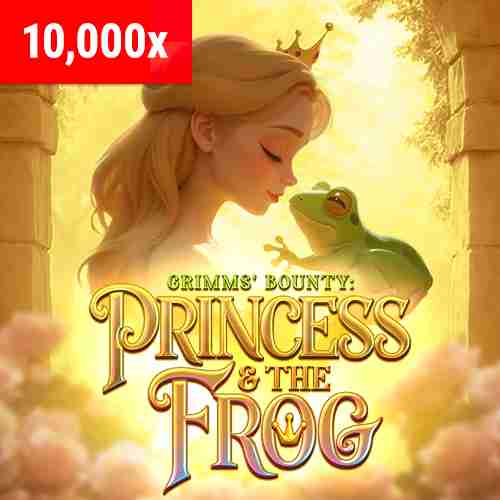
Grimms’ Bounty Princess & the Frog puts its fairy-tale characters into a compact three-reel, five-row grid. The illustrated forest makes the presentation easy to recognize. The less obvious distinction is between Prize symbols, which show values, and Collector symbols, which can affect those values.
What to find before you start
The player above opens the free-play version of Grimms’ Bounty Princess & the Frog. Give the title screen time to finish, then look for the central three columns, five rows and the separate prize and collector illustrations without starting another round. Open the game’s own information screen for its symbol key. PG SOFT presents the princess and frog against an illustrated forest; look to the in-game legend for the criteria behind the feature effects. Note where the key or rule illustration sits so you can bring it back after an unfamiliar result.
The fairy-tale scene may draw your eye outward, but the narrow board is a good starting point. Count the three reels first and then the rows between the top and bottom edges. The game’s connecting-ways explanation belongs to the board, while the character animations belong to the presentation. Learning the difference saves you from trying to read a gesture as a symbol condition.
A storybook grid with collector symbols
The official introduction identifies Prize and Collector symbols as distinct mechanics. Find each icon in the guide and compare where it is used in the example. A Prize symbol is associated with a displayed value. A Collector has a separate role in the way the game presents those values. Reading the two together makes more sense than treating every number as a separate prize.
The fairy-tale names will help you find the right screen, but they do not tell you what a label means. For example, the title refers to both a princess and a frog; that is a theme distinction, not a complete feature map. Use the official symbol guide to see how the functional icons are drawn and how they are distinguished from the story artwork.
Keep these two parts of the interface separate
The three-column board is described as a connecting-ways game. Start with the game’s own visual example instead of assuming that every game with three reels uses the same pattern. A feature condition is also not the same as a normal matching combination. The information menu is the place to see which rule belongs with the image highlighted during a result.
The Scatter symbols are the cue for the documented free-spin feature. That explanation belongs apart from the Prize and Collector rules. If the on-screen result is busy, read the feature message and the numeric label separately. One may identify the round you are in; the other can refer to a simulated value shown during it.
Read two different situations side by side
Imagine you see a Prize icon with a number and a separate Collector illustration. Match each icon to its entry rather than immediately adding what you see. Identify the number as a displayed value first. Then read the rules to determine the role assigned to the Collector. The visual closeness of the icons does not by itself tell you how the interface treats them.
For contrast, imagine you see a set of Scatter icons on the slim board. Start by counting the relevant icons and reading the message that follows. The question in that situation is whether the condition described for the free-spin feature is met, not what value a Prize icon carries. The provider’s examples keep those questions in separate sections for a reason.
Both situations are hypothetical examples of how to read the screen in Grimms’ Bounty Princess & the Frog. Their value is in distinguishing a starting cue from a visual consequence. The provider’s rules are the reference for that distinction. If you only see the ordinary game, you can still check each example in the help panel and observe where its graphics and numbers would be reported. There is no need to keep trying to make either scene appear.
What to check in the provider’s information panel
Read the connecting-ways explanation before trying to interpret the Prize display. Trace the combination as the game illustrates it across the three columns. Once you can point to the rows involved in a highlighted result, switch to the labels for Prize and Collector. This helps you get more out of the demonstration even if only the basic display appears.
Then look at how the game distinguishes a feature name, a number on a symbol and the total for the current simulated result. On a narrow phone screen, reading one item at a time is more practical than trying to watch the entire scene. Bring up the help panel again if you need to confirm the shape of an unfamiliar icon.
How do I tell the two apart? A Prize value and a Collector action are not the same type of information. Before interpreting a highlighted result, identify which icon is associated with each, then compare what the game reports. If instead it is the Scatter entry that applies, use that explanation for the opening of the special round.
What if the feature does not appear? You do not need to see the whole feature sequence to learn these labels. Start with the provider’s connecting-ways example, compare the Prize and Collector illustrations and then check the Scatter section. That sequence answers useful questions about the game even if you never see a particular feature during free play.
Use the free-play screen as a reference
The virtual result represents what the free-play interface reported for that event. A number on a Prize icon is not a cash offer, and a short visit does not tell you how often a Collector or Scatter will appear. Treat the guide as an aid to understanding the title’s vocabulary and board, not as a way to predict later results.
Results in Grimms’ Bounty Princess & the Frog describe what happened on this simulated board. They do not establish a future sequence, the value of a prize, or the terms of another version of the game. In particular, each simulated feature can be understood from the corresponding rule example without waiting for a round to match it exactly. You can leave the player after checking the part of the interface you came to understand.
Source notes and availability
This guide uses PG SOFT’s official Grimms’ Bounty Princess & the Frog information for the game rules. The official game catalog page identifies the title. The existing demo listing is credited for discovery, not for this text. The free-play frame is hosted by the provider and may have its own availability or language options. See the website policies for more about the service.