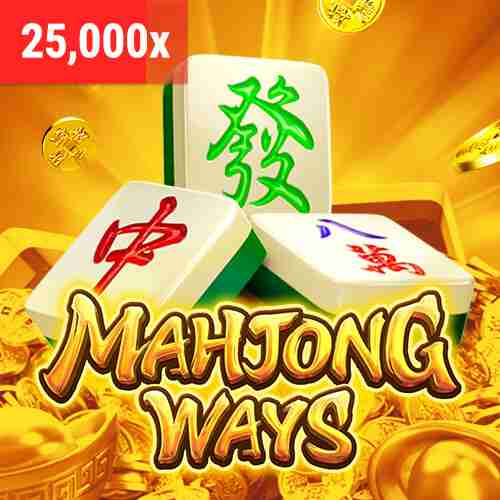
About Mahjong Ways Demo: How Gold-Plated Tiles Change
This is a third-party free-play demo, not real-money play on Demo slot pg. Availability and access checks are controlled by the provider. Demo results do not predict future outcomes.
Mahjong Ways borrows the look of traditional Chinese mahjong tiles and places them on five reels with four rows. The free demo is not a table game: it does not ask you to draw, arrange, or discard tiles. Its own rules distinguish ordinary tile illustrations, gold-plated versions, and Wild symbols. The most useful place to start is the group of three columns where the gold plating can appear.
Where the tiles come from and what they do here
Traditional mahjong is played with tiles, and a recognizable part of its appearance is the clear, compact marks on their faces. PG Soft cites that tile game as inspiration. In Mahjong Ways, the designs are part of a reel interface rather than a hand held by a player. Recognizing the artwork can help you locate an icon, but knowing how a mahjong hand is made will not explain how the software handles a reel result.
Look at the opening art and then at the scale of the symbols during the demo. The opening gives the tiles and coins room to establish the theme. The playing display has to show twenty positions, a row of multiplier labels and separate result information. Those parts of the screen have different jobs. The quickest way to get oriented is to look for the rectangular grid before examining the smaller marks inside it.
Reels two, three, and four form the gold-plating area
Five reels make it easy to identify the two outer columns and the group of three inside them. In the illustrated guide, the gold-plated versions are documented on reels two, three, and four. They are variations of ordinary symbols, not another kind of column. The developer makes an exception for the Wild and Scatter themselves. Looking for the ordinary picture and the gold coating separately makes the difference easier to follow.
For a phone-sized check, find the third column by its central position and compare it with the one immediately to either side. That is the documented area. If a gold detail appears near the border of the game or on part of the opening, it is not one of those reel positions. The gold color is shared across the theme. The relative place of the object and what is printed on it are better guides to its function.
Gold plating is one state; a Wild is another
The provider describes a cascade as a sequence in which replacement symbols drop into positions after a result. Its gold-plating rule is tied to that progression. If a gold-plated symbol took part in a winning combination, it can become a Wild after the new symbols have cascaded down. Read that as a change that the software applies to a qualifying position, not as a claim that every gold tile turns into a Wild when it appears.
In the documentation, compare the before and after pictures. The first view shows an ordinary tile with its gold treatment. The later view can show a separately labeled Wild. The gold treatment is not the finished Wild itself. The replacement label is the evidence of that stage, while the surrounding movement shows how symbols were rearranged. The written rule connects those pictures more clearly than a single screenshot with both types visible.
The rules describe the Wild as a substitute for ordinary symbols but not for Scatter. That exception matters because the feature trigger has its own illustration and count. If you recognize a symbol because it resembles a marked tile from traditional mahjong, read the game’s label before deciding whether it belongs to the substitution or the trigger section.
Three Scatters and the twelve-spin starting count
PG Soft’s notes state that three Scatters open a feature starting with twelve free spins. Each additional trigger Scatter adds two to that count. The number of Scatters and the number of feature spins are different readouts from the multiplier values. In its ordinary play illustration the developer places the multiplier labels at the top. During the feature the rules provide a different sequence, so check the mode described in the example before interpreting a number on that row.
It is also worth checking that the help sheet is for Mahjong Ways, not the separate title Mahjong Ways 2. The original’s published feature begins with twelve spins rather than the sequel’s documented ten, and the two layouts have different outlines. A rule attached to one title should not be copied to the other because both use a tile theme. The title in the rules panel is a useful reference before comparing screenshots from different pages.
In the original game sheet, a row of four multiplier examples sits above the tiles, with values one, two, three, and five in the ordinary-play illustrations. The colored finishing effect on a tile is shown below those numbers, in the grid. For a quick reading of one image, name the column and the state of the tile before looking up at the multiplier. That avoids confusing a label at the top with a number printed on an icon.
What to check in the free demo
Open the free-play control above and look at the five-by-four layout. Visit the symbol guide and compare an ordinary picture, a gold-plated picture, the Wild and the Scatter. Then return to the main screen and find the three inner columns and the multiplier labels. If they are hard to see together, full screen may be helpful where supported. The aim is to make the boundaries and the labels readable, not to influence the next round.
A short preview can show whether you can follow a tile through the cascade explanation without losing track of which state it is in. The rules describe this even when the transformation does not appear in a live sample. The entire browser session uses virtual credits, which have no cash value. The in-game feature called free spins is separate from the fact that the preview itself is free to open.
Sources and availability
PG Soft’s Mahjong Ways release notes describe the theme, layout, and feature count. The illustrated game sheet documents the gold-plating and Wild rules. Demo availability was originally identified through the original directory listing. The game embedded here is provided by public.pg-demo.com; controls, language, and availability depend on the provider.
Adults only. There is no deposit or cash-out in this preview. Read the website policies.